
In short: confirm you are dealing with the manufacturer, verify its licences and ISO 13485 certificate yourself, ask for safety test reports to current standards, check the import rules at home, and check probes, software licences, reagents, power and spare parts before you pay the balance.
Chinese manufacturers supply diagnostic ultrasound systems and laboratory analyzers to hospitals around the world, often at a lower price than European or American brands. The risk for a clinic or distributor in Zimbabwe is not the country of origin. It is buying from a trading company, receiving the wrong configuration, or finding that nobody can service the machine. These are the checks we use when visiting Chinese medical equipment suppliers for buyers in Zimbabwe and the SADC region.
What we saw on our supplier visits
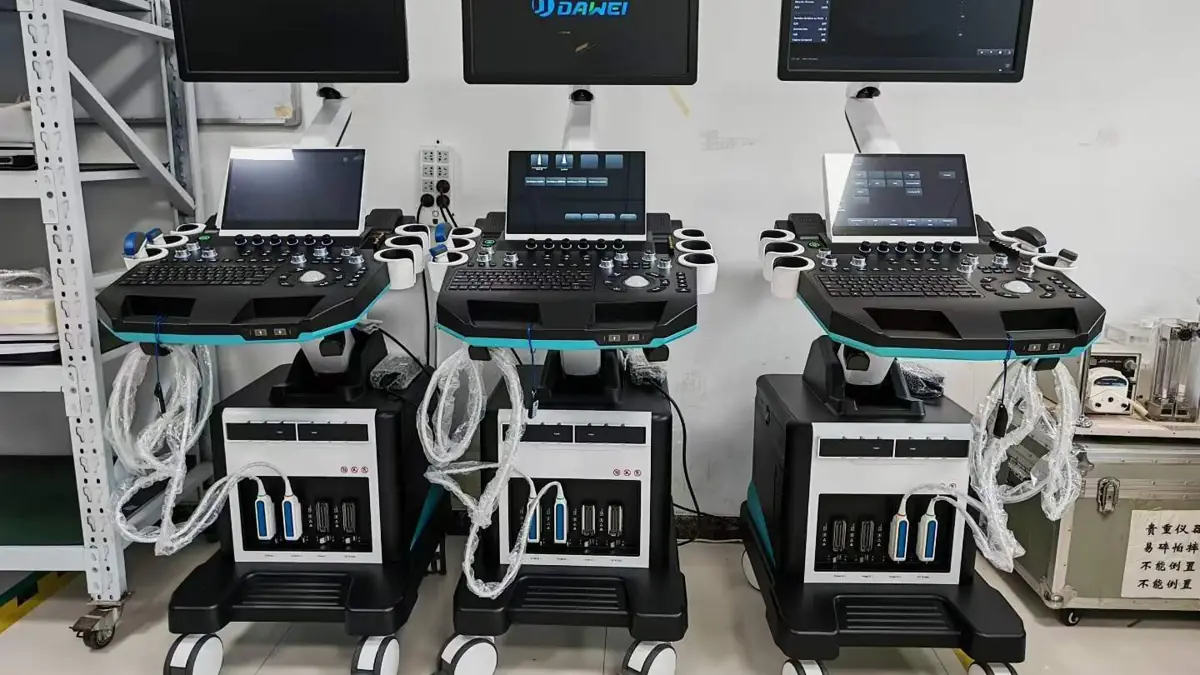
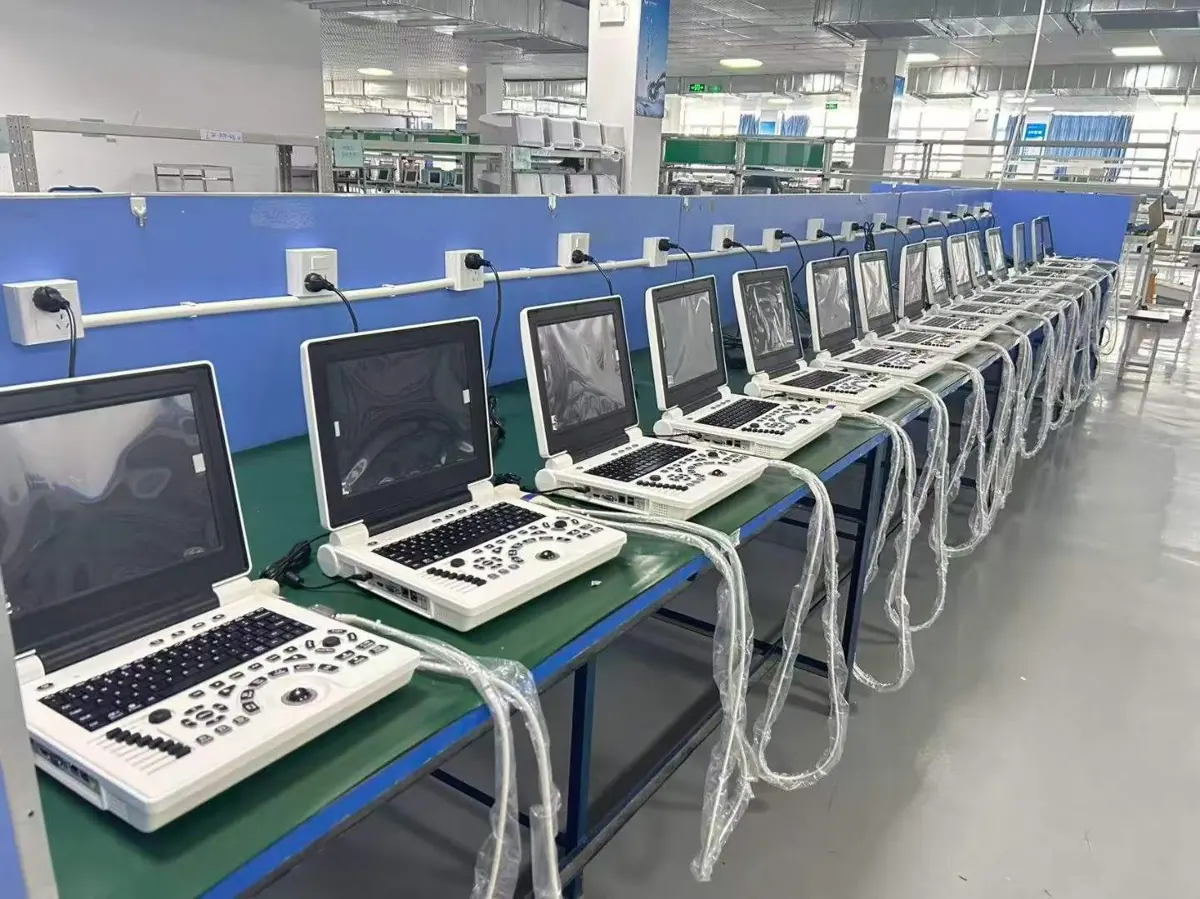
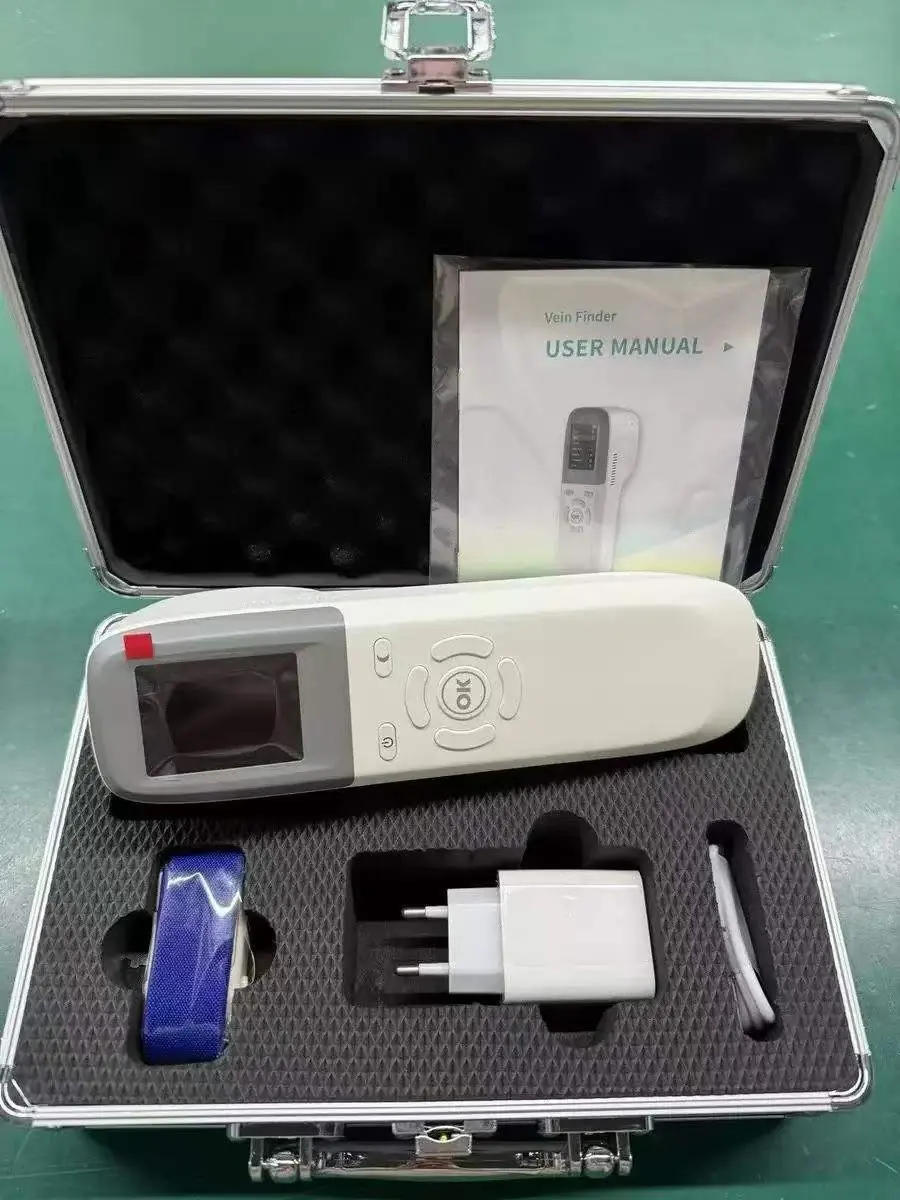
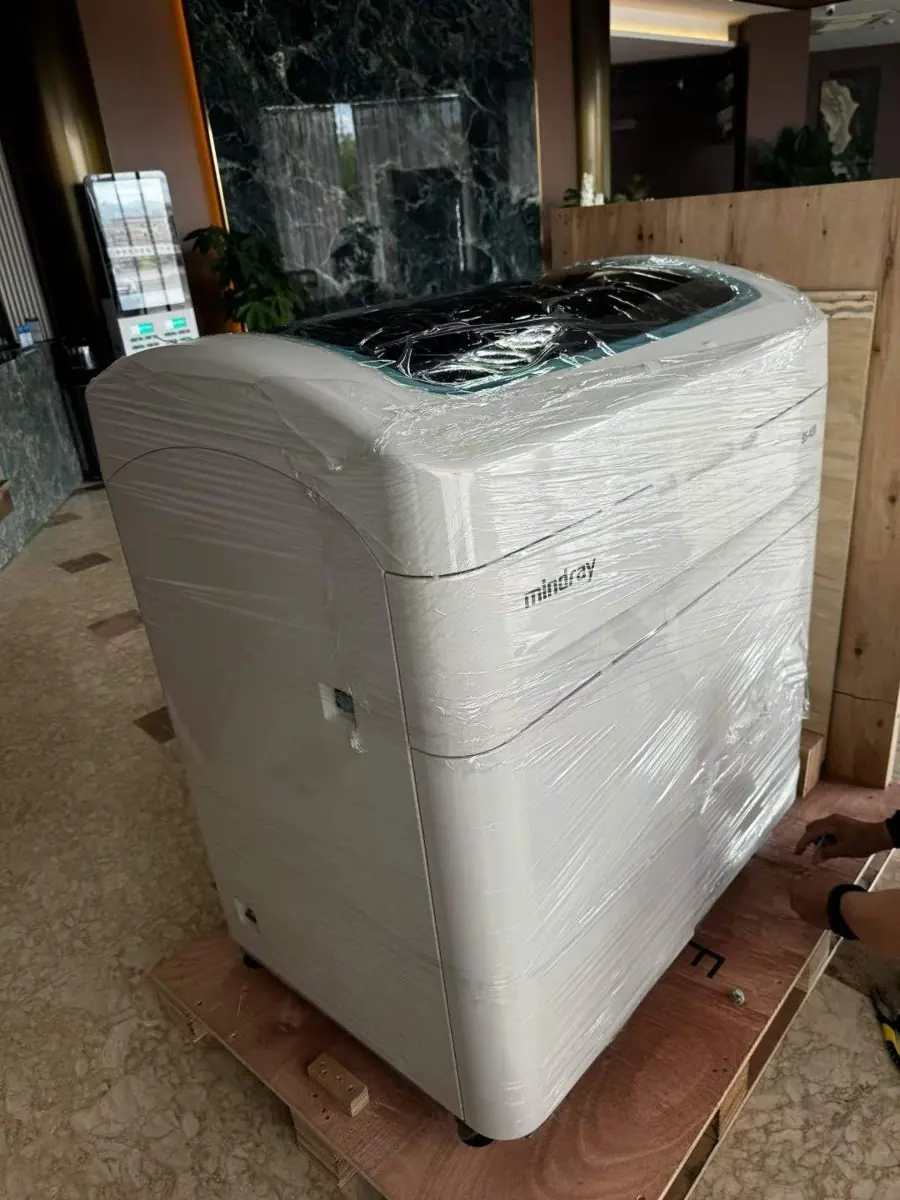
Our team in China visits medical equipment factories to shortlist suppliers for buyers. The photos on this page come from those visits: trolley-mounted colour ultrasound systems, a bench of portable ultrasound units, a handheld vein finder kit and a clinical chemistry analyzer being uncrated. We do not name the brands or factories. What matters is the method, which is the same for every supplier. More photos are on our field work page.
Step 1: Confirm you are dealing with the manufacturer
In China, diagnostic ultrasound systems and clinical chemistry analyzers are Class II medical devices. A Class II device needs a registration certificate, valid for five years, and the factory needs a medical device production licence. Ask for both, and check that:
- the company name and address on the licence match the site you are visiting;
- the registration certificate covers the exact model you are buying, and has not expired;
- the certificate number appears in the public database of the National Medical Products Administration (nmpa.gov.cn);
- the company issuing your invoice is the same legal entity, or you understand why it is not. See factory, trader or brand.
Some products are made only for export and have no Chinese registration. China issues a separate export sales certificate for these. It confirms that the factory follows good manufacturing practice, but the Chinese authority does not check whether the product meets the rules of the importing country. That is not automatically a problem, but the buyer then has to rely more on the checks below.
Step 2: Verify the quality certificates yourself
ISO 13485:2016 is the quality management standard for medical device makers. Do not accept a PDF at face value. Search for the certificate on IAF CertSearch, the international database of accredited certificates, and confirm the number by email with the certification body. Check that the scope says design and manufacture of the product type you are buying. A scope that only says trading or distribution does not cover manufacturing.
CE marking under the EU Medical Device Regulation (EU) 2017/745 or the In Vitro Diagnostic Regulation (EU) 2017/746 is a useful extra check. For a diagnostic ultrasound system the CE certificate should come from a notified body. Look up the notified body number in the EU NANDO database. Since 28 May 2026, use of the EUDAMED database, including its notified body and certificate module, has been mandatory in the EU. Be wary of a "CE certificate" issued by a testing company that is not a notified body.
Not every device needs a notified body. Chemistry analyzers are usually Class A in vitro diagnostic instruments and many vein finders are Class I devices, so the manufacturer declares conformity itself. For these, ask for the EU Declaration of Conformity and the registration details of the maker's EU authorised representative.
Safety test reports should cite current editions: IEC 60601-1 edition 3.2 and IEC 60601-1-2 (electromagnetic compatibility) for ultrasound systems and vein finders, plus IEC 60601-2-37:2024 for ultrasound; and IEC 61010-1 with IEC 61010-2-101 for laboratory analyzers.
Step 3: Know the import rules at home
- Zimbabwe. Published research from 2024 found that the Medicines Control Authority of Zimbabwe (MCAZ) did not yet have published classification rules for medical devices, and that draft import and export regulations for devices were still awaiting approval. MCAZ's 2025 traceability guideline (GS1 barcodes and identifiers for medical products) is being phased in over five years. Confirm the current position with MCAZ before you ship, including whether an import permit or premises licence is needed, especially for analyzer reagents.
- South Africa. SAHPRA licenses medical device establishments rather than products. Since 1 June 2025, new and renewing licences, including for importers and distributors, need an ISO 13485:2016 certificate in the establishment's own name from a SAHPRA-recognised certification body, or proof of an agreement with one while certification is in progress.
- Botswana. BoMRA has announced that since 1 October 2025, medical devices, including in vitro diagnostics, are registered through its BRIMS portal.
If the equipment is for a donor-funded or UN-funded project, check the funder's rules early. UNDP, for example, accepts approvals from a list of reference regulators for most medical devices, and Chinese registration on its own is not on that list.
Step 4: Pre-shipment checks by product
Ultrasound systems (trolley and portable)
- Number and type of probes (convex, linear, phased array, endocavity) and their frequency ranges, against the order. Probe serial numbers on the packing list.
- Software options such as colour Doppler and measurement packages, activated with permanent licences rather than trial periods.
- English user interface and reports, with acoustic output indices (MI and TI) displayed on screen.
- Battery and charger for portable units, and disinfectants approved for the probes in the manual.
Vein finders
- Image clarity and alignment on a test subject, battery life, charger plug type, and the stand or mount ordered.
- Complete kit: device, charger, cable, strap and English manual.
Clinical chemistry analyzers
- Closed or open reagent system. A closed system only runs the maker's own reagents. Check they can be bought in Zimbabwe at a known price before you order the analyzer.
- Factory calibration record, calibrators and controls supplied, throughput in tests per hour, and water quality needs.
- Reagent shelf life on arrival and cold-chain shipping for reagents.
- Connection to a laboratory information system if needed, and English software and reports.
For every item
- Power rated 220 to 240 V, 50 Hz, with a plug or lead that suits Zimbabwean sockets (Type G or Type D). We recommend a UPS or voltage stabiliser for analyzers.
- Service manual access, engineer training, a priced spare-parts list, and a warranty that starts at installation rather than shipment.
- Packing that survives the sea journey and the road leg inland. See our product testing before shipment guide.
Red flags
- The supplier will not allow a factory visit or a video call from the production floor.
- Licence and certificate names do not match the company invoicing you.
- An ISO 13485 certificate that cannot be confirmed with the certification body.
- No price for reagents, probes or spare parts until after you have paid.
- Software features that expire after a trial period.
Before any deposit, ask us for a pre-payment supplier screen.
Frequently asked questions
Is medical equipment from China lower quality?
Not by default. China has manufacturers that supply hospitals worldwide and others that only assemble parts. The document and factory checks in this guide separate the two.
Does Zimbabwe require registration of ultrasound machines?
Published research from 2024 found that MCAZ had no published classification rules for medical devices and that device import regulations were still in draft. Rules can change, so confirm the current position with MCAZ before you ship, especially for analyzer reagents.
Does Africa Opal sell medical equipment?
We source and verify suppliers for buyers, inspect before shipment and arrange shipping, so the buyer decides with an independent report in hand.
- IMDRF China country update, March 2026: export certificates and revised GMP
- Medical device classification and licences in China, CIRS
- Certificate verification guide, IAF CertSearch
- IEC 60601-1 edition 3.2, IEC webstore
- IEC 60601-2-37:2024, IEC webstore
- Mandatory use of EUDAMED modules, HPRA
- Medical device regulation in Zimbabwe, PLOS ONE (2024)
- Frequently asked questions, MCAZ
- ISO 13485 for establishment licences, SAHPRA (April 2025)
- MCAZ traceability guideline and BoMRA registration, Market Access Africa
- Technical and regulatory requirements for medical devices, UNDP (2025)
- User guide: WHO technical specifications for medical devices
This article is general guidance, not legal or customs advice. Rules change; confirm requirements for your product before you order.
Want us to apply this to your next order?
Talk to us on WhatsApp