
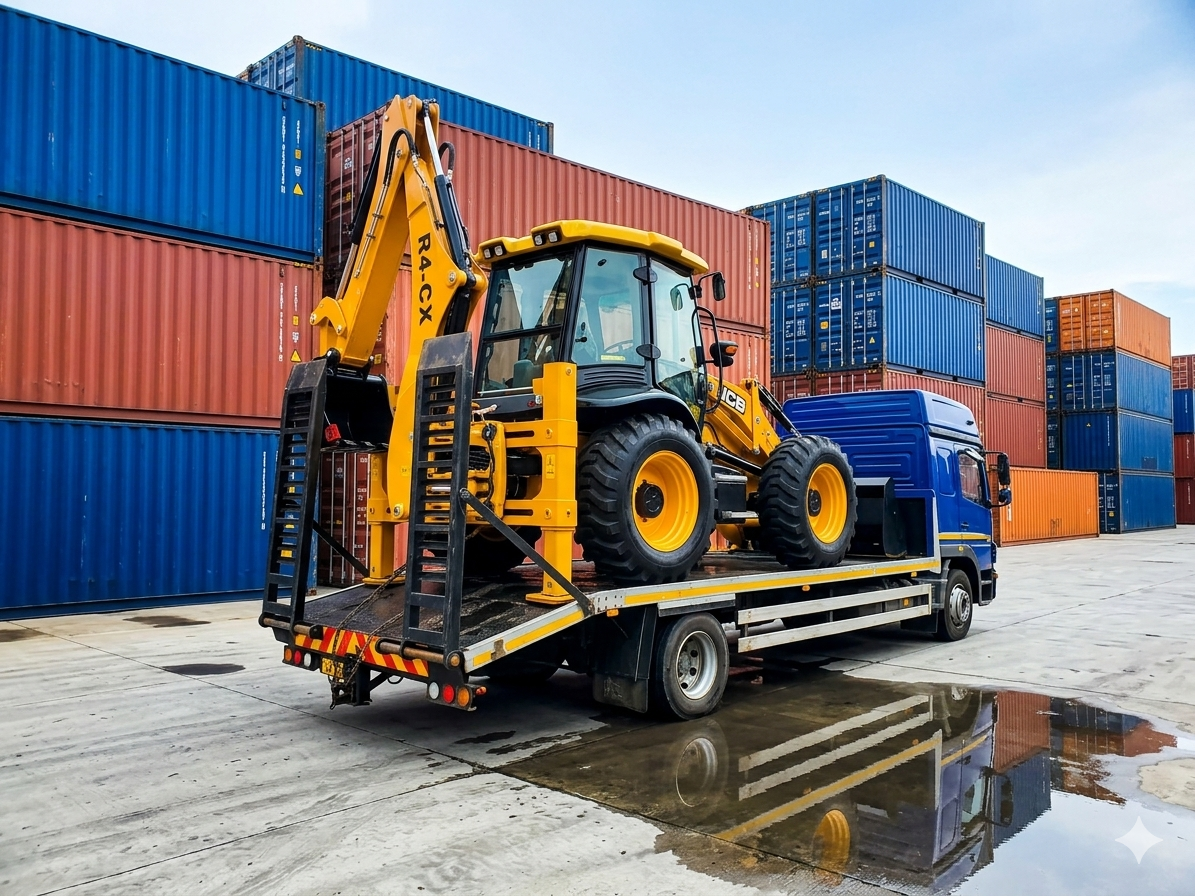
Zimbabwe is landlocked, so every sea shipment reaches the country through a neighbour's port and at least one land border. The route you choose decides your transit time, your exposure to border delays, and how much stock you need to hold. This guide covers the routes we use and how we decide between them.
Sea freight via Beira
Beira in Mozambique is the closest major port to Harare and Mutare. According to a TradeMark Africa analysis published in July 2026, Zimbabwe accounts for about 55 percent of the cargo moving through Beira, and almost all of it crosses at the Forbes and Machipanda border, nearly 300 kilometres inland.
The same analysis cited a March 2026 survey of more than 1,000 truck drivers in which the Machipanda border and the port of Beira each accounted for 37 percent of the worst delays reported, with some drivers waiting more than 72 hours at the border. Improvements are under way: on 8 July 2026 Mozambique and Zimbabwe operationalised a Joint Border Committee for Forbes and Machipanda, Mozambique has committed to a one-stop border post, and the Beira container terminal operator is investing to raise capacity from 400,000 to 700,000 TEUs a year.
Sea freight via Maputo
Maputo is a strong option for cargo headed to Bulawayo, the south and onward SADC destinations, and gives flexibility when Beira is congested. Our consolidated sea service quotes 50 to 60 days from China to Beira or Maputo, after which port clearance and the road leg are added.
Via Durban and Beitbridge
Durban has frequent sailings, but cargo then crosses Beitbridge, one of the busiest land borders in the region. In July 2026 South Africa's Border Management Authority attributed truck congestion at Beitbridge to bottlenecks on the Zimbabwean side, including truck parking shortages and slow processing by clearing agents. We use this route when it suits the cargo and timing, not by default.
Air cargo
Air cargo takes about 14 days from our China warehouse to Zimbabwe, with departures on Tuesdays and Thursdays. It suits samples, urgent spares, phones, laptops and high-value goods where holding cost matters more than freight cost. It is charged on the higher of actual weight and volume weight, so bulky light goods are usually cheaper by sea.
Onward to SADC
For buyers in Zambia, Malawi, Botswana and beyond, the same consolidation can continue by road. Coordinated border processing has helped: at Chirundu, the one-stop border between Zimbabwe and Zambia, clearance times have fallen from days to hours according to TradeMark Africa.
How we plan your shipment
| Cargo | Usual route | Why |
|---|---|---|
| Samples, spares, phones | Air, 14 days | Speed matters more than freight cost |
| Mixed general goods | Sea consolidation via Beira or Maputo | Lowest cost per CBM, weekly loading |
| Heavy machinery, solar, steel | Sea, dense-cargo rate | Charged on weight above 800 kg per CBM |
| SADC destinations | Sea then road via the nearest corridor | Fewest border crossings |
Peak periods, especially from October to February, add time at ports and borders. Book early in those months, and plan stock on the late end of the estimate. You can price both modes instantly with the calculator on our home page.
- Why a joint border agreement signed 290 kilometres away could transform the Beira Corridor, TradeMark Africa, 15 July 2026
- BMA blames Zimbabwean bottlenecks for freight truck delays at Beitbridge, EWN, 26 July 2026
This article is general guidance, not legal or customs advice. Rules change; confirm requirements for your product before you order.
Want us to apply this to your next order?
Talk to us on WhatsApp